
An archaeological study of shipbuilding in Western Norway in the Late Iron Age (AD 550-1050)
….or rather an introduction to my research topic!
The landscape of Norway has always made seafaring an indispensable requirement for its inhabitants. Thus, it is not surprising that since prehistory, boats and ships were critical tools for communication, trade, and war and represented one of the most important motifs in religious symbolism. This especially holds true for the Late Iron Age (AD 550-1050) in Western Norway, where boats and ships were pivotal for the formation and maintenance of centres of power and the westward expansion of the Viking age.
Significant changes in the archaeological records from Western Norway during the late 6th and early 7th centuries can be seen as a consequence of re-organisation of settlements and a process of centralisation and consolidation of power in the hands of the aristocracy and leading farmers.
This translated into the establishment of few petty kingdoms in the 7th and 8th centuries that, from central places like Avaldsnes (Karmøy), maintained control over necessary sea routes along the coast and the regional traffic of goods from different ecological zones. Finally, the late 8th to 11th century was marked by the westward expansion, a maritime endeavour that relied on the shipbuilding skills developed by these coastal societies.
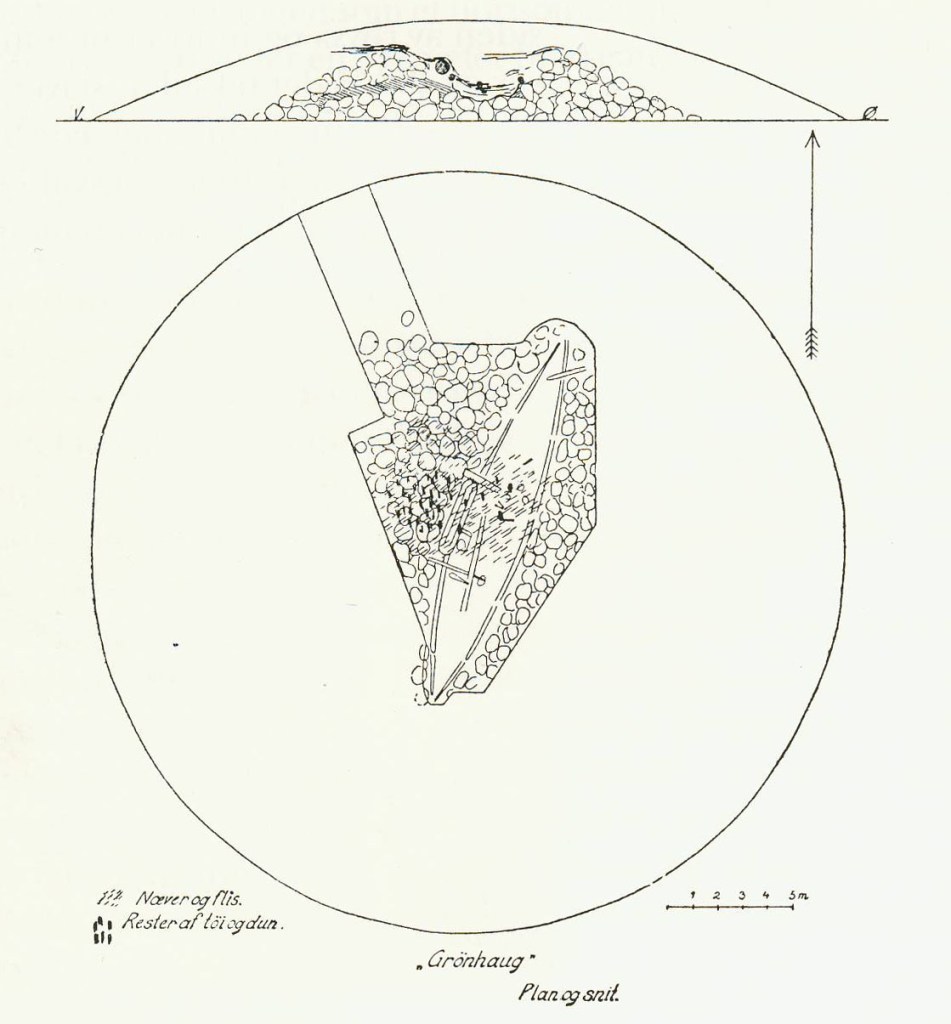
The Grønnhaug ship burial near Avaldsnes, Karmøy.
Developments in ship technology were essential for the Viking trade, raids, and the launch of regular journeys across the Atlantic and the North Sea. However, such developments were already taking place in the Merovingian period (AD 550-750), as it is generally agreed that maritime contacts were established across the North Sea before the Viking raids. In these processes, Rogaland emerged as a key region.
The two earliest ship burials known in Scandinavia were found near Avaldsnes and are interpreted as evidence of a late 8th century petty kingdom. These ship burials date to the 780s–790s AD, and it has been suggested to be modelled on the Sutton Hoo ship burial in East Anglia, UK. These burials not only demonstrate the existing contacts across the North Sea at the eve of the Viking raids but also the centrality that ocean-going ships already had for the society.
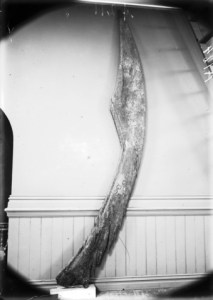
It was found during the construction of a new road. The timber laid flat between the edge of a layer of clay and bog, 40 cm under turf.
Although ships and boats played such a significant role for Norwegian coastal societies, our knowledge about their technology is relatively meagre. Studies on shipbuilding in Norway during the Late Iron Age are mostly limited to few complete ships finds from graves or bog offering contexts such as Oseberg, Gokstad, Tune and Kvalsund. Besides these complete finds, there are a considerable number of isolated nautical timber finds from the Late Iron Age stemming from bogs, but they have received little or no attention at all. In Rogaland alone, materials from over 11 sites from the Late Iron Age have been identified so far. Although a detailed catalogue or study does not yet exist, Western Norway seems to have the highest concentration of such finds.
Furthermore, recent dendrochronology studies have proven that both the Kvalsund ship, the Avaldsnes ships, and Oseberg originate from Western Norway. This underlines the centrality of this region for the development of technology, crucial for the Viking maritime endeavours.
Ships, boats, and timbers
Ships and boats are the outcome of specific local, social, and environmental contexts and can reveal information about the societies that built and used them. Shipbuilding is characterised by a practice, namely the combination of techniques, tools, logistics, and materials. But it is also something conducted by individuals, constantly negotiating meaning and creating communities of practice and identities.
Thus, each nautical timber embodies elements of specific building practices, sometimes particular to a specific period, purpose, region and even community.
Techniques and materials are cultural features in the same way as pottery manufacture and decoration and expression of cultural preferences that reflect social implications. Equally, individual timbers can reveal information about their natural environment and mode of procurement.
By analysing ships and boat finds, it is possible to extrapolate classes of information beyond the mere functional understanding of building, rowing, or sailing a vessel. The study of constructional features, techniques, and materials can explain changes and related social causes over time and space to the know-how and organisation of the work in a specific community.
The Nordic shipbuilding tradition in Norway during the modern period has a strong regional character, with significant differences in the practices within the same tradition between Eastern, Western, and Northern Norway. However, the concept of regionality in shipbuilding has never been explored for the Late Iron Age in Norway or even later periods.
It is widely accepted that a common Nordic shipbuilding tradition existed throughout the major part of the Iron Age and the entire Viking Age, with pockets of survival up to the present days, spreading from the North Atlantic to the Baltic. Furthermore, the consensus is that a certain degree of conformity and continuity is found in this building tradition from the Viking Age to the early medieval period. Conceptual understanding, guidelines, and rules-of-thumb appear very much alike. However, detailed studies of Viking Age ship-finds suggest that a certain degree of variation existed, which has been interpreted as a result of different practices within specific shipbuilding communities.
Aims
The project aims to provide a new perspective into understanding the Late Iron Age period in Western Norway through an archaeological investigation of shipbuilding and explore the relation between shipbuilding material culture, central places, and central regions.
Developments in shipbuilding (here used to encompass the construction of ships and boats) can be seen in the light of responses to societal demands. However, such developments might enable transformations in society as well. Thus, through detailed documentation and analysis of ship finds and nautical timbers from bog and grave contexts from Western Norway, physical and metaphysical constraints can be explored, such as technology, environment, and society. More precisely, the following set of questions can be investigated:
- Can regional and interregional patterns be discerned in the shipbuilding practice from the available material from Western Norway?
- How unified or diversified is the shipbuilding culture between Western Norway and the rest of Scandinavia, and what that can tell us about geopolitical contexts?
- Can ship timbers provide information on the location of building sites? How their placement correlates to central places and strategic locations along communication routes?
- Regarding the procurement of suitable timbers for shipbuilding, is there evidence of resource management?
By analysing and understanding the shipbuilding in the region and its development throughout the Late Iron Age, and by placing it in a broader context, it would allow for an investigation of the hypothesis that the region was an important hub for innovation in shipbuilding during the Late Iron Age.
A secondary output of this study is the production of new knowledge from existing museum collections. At the same time, it aims to highlight the importance of fragmentary nautical timbers as source material for societal and environmental studies.
Methods and Delimitations
The first stage of this study is to assemble a catalogue of finds from graves and bogs from Western Norway dating from the Late Iron Age.
The main idea is to first study the body of materials and to isolate study cases to comprehend trends and patterns in technology and practice in the region. Consequently, the regional dataset will be compared with finds from Norway and Scandinavia to better understand the shipbuilding culture and in a broader context and the role the region had in the development of maritime technology.
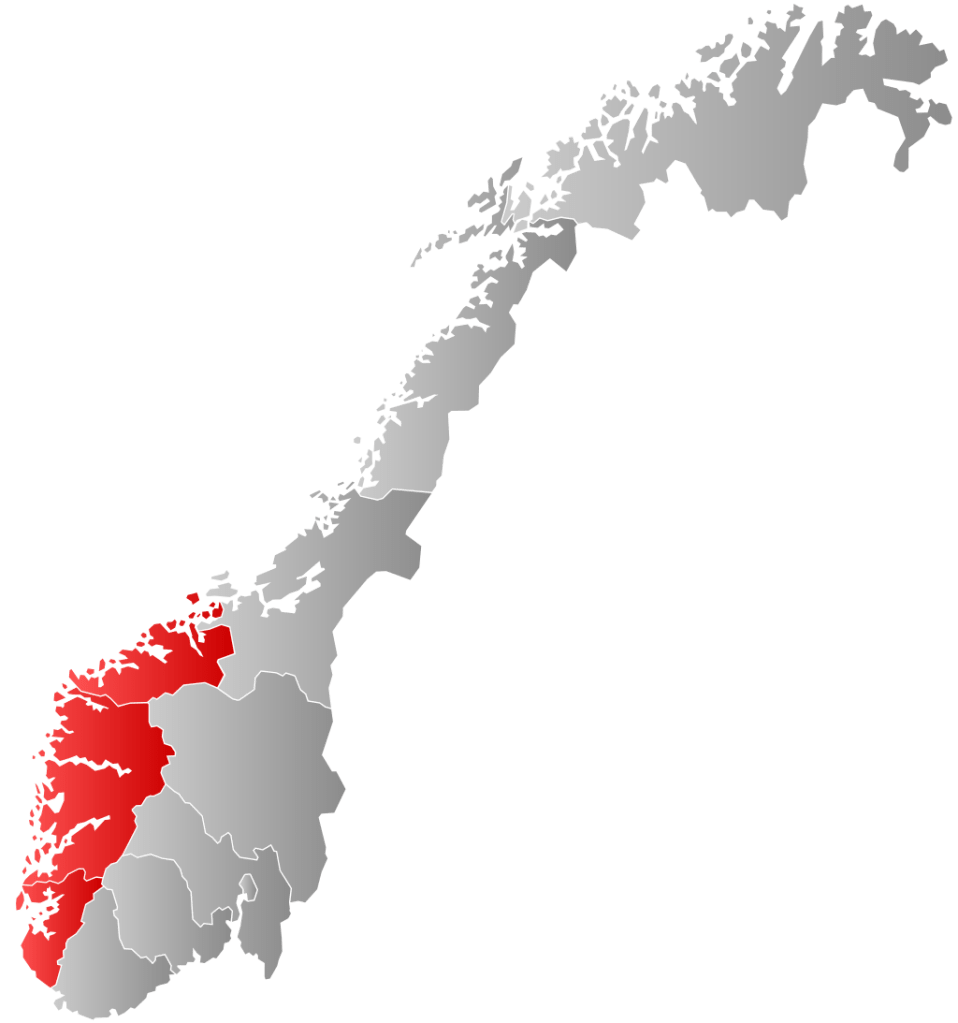
The geographical delimitation of the study area is set within the borders of the counties of Rogaland, Vestland, and Møre og Romsdal. This delimitation is a practical and methodological one, as it also roughly reflects a judicial and political entity in the Late Iron Age.
An interdisciplinary approach will be at the core of this study, starting with the documentation method, which can be read in detail here: The 3D annotated scans method: a new approach to ship timber recording. The method captures at once a series of details: from the overall shape, to toolmarks, to the grain pattern of the timber. This will allow to efficiently document those timbers that have not been previously recorded or with a level of detail not adequate for analysis. Furthermore, the digital nature of the documentation could allow the reconstruction of the vessel (for example the Avaldsnes ships) or the parent tree (size and shape), which in turn could provide an insight into resource management.
Especially bog finds associated with shipbuilding activities can reveal spatial and environmental information for the immediate surroundings as they most probably originated in the same area. Together with the dendro-analysis (for example: growth patterns), a reconstruction of the modes of resource management will contribute to understanding the underlying power/economic system.
 The 13th Archaeologist
Thanks for starting your blog. Excellent to see you deploying your digital documentation method and seeking to integrate dendro-archaeology within it. Please keep adding to this as your thinking and work progress. Enjoy the journey!
LikeLike
Hei Nigel, thanks a lot!
LikeLike